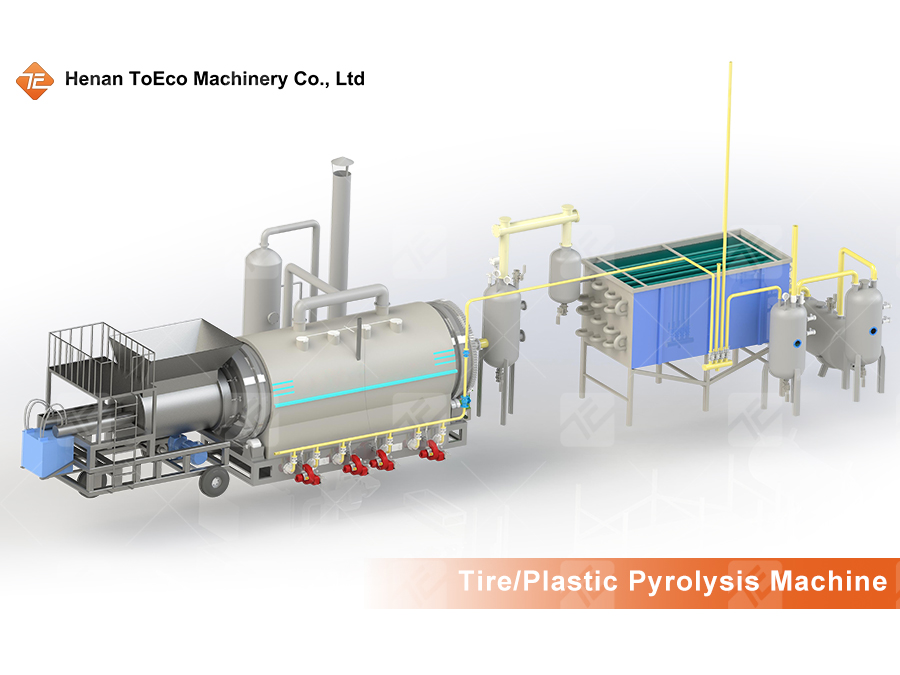
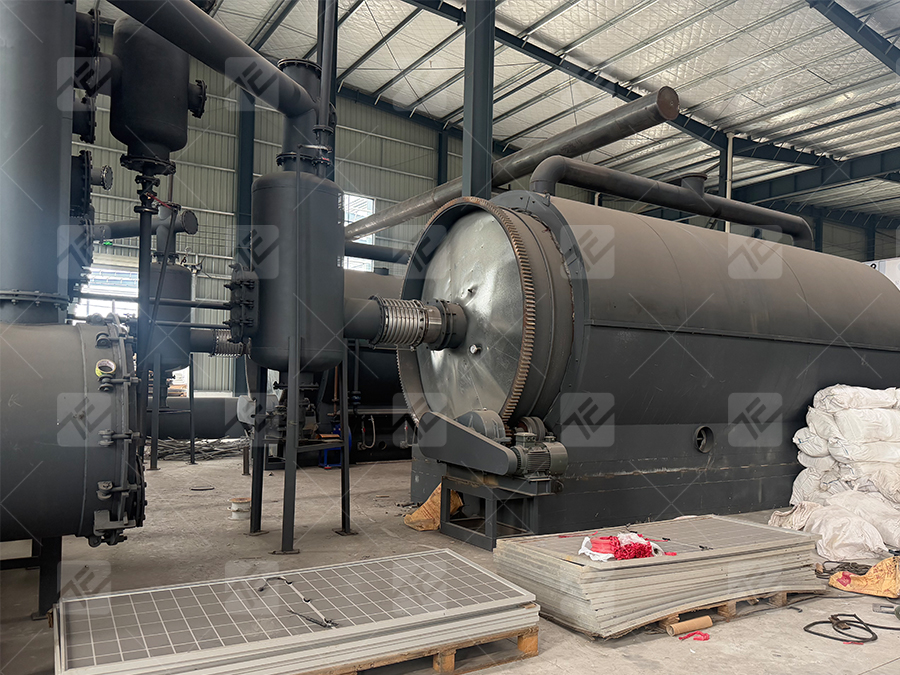
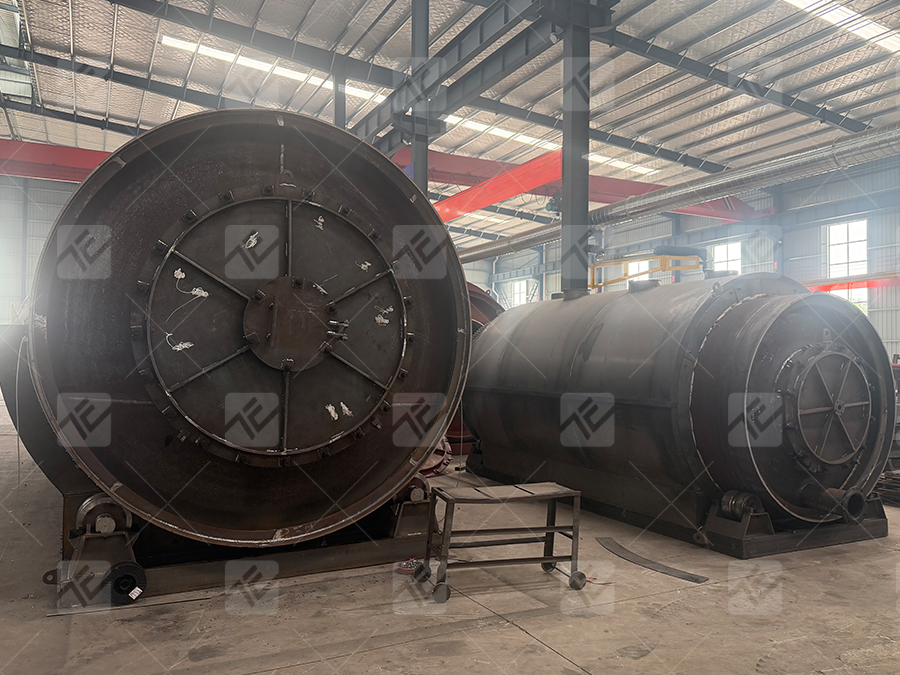
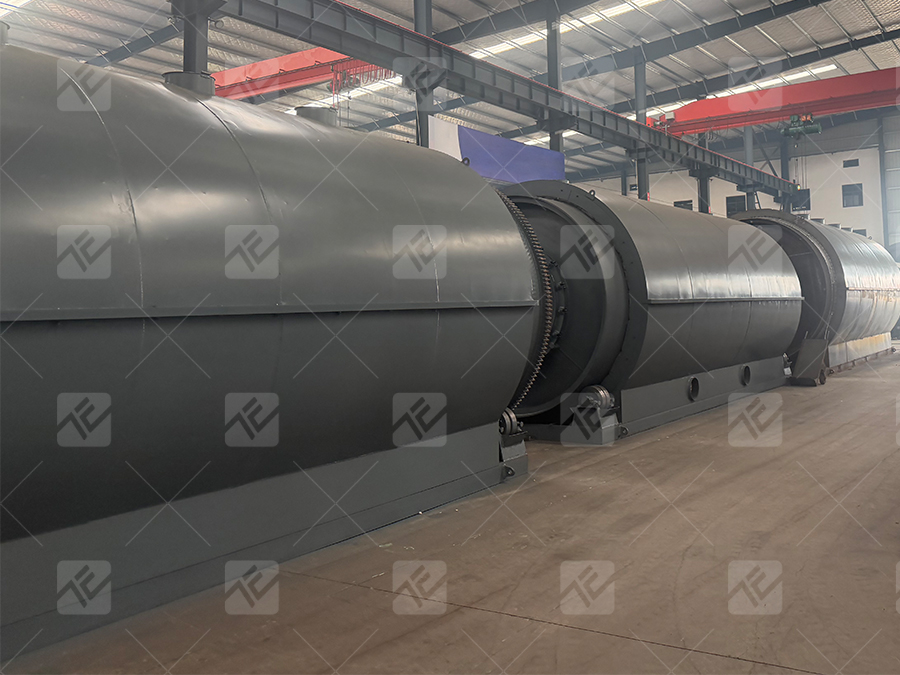
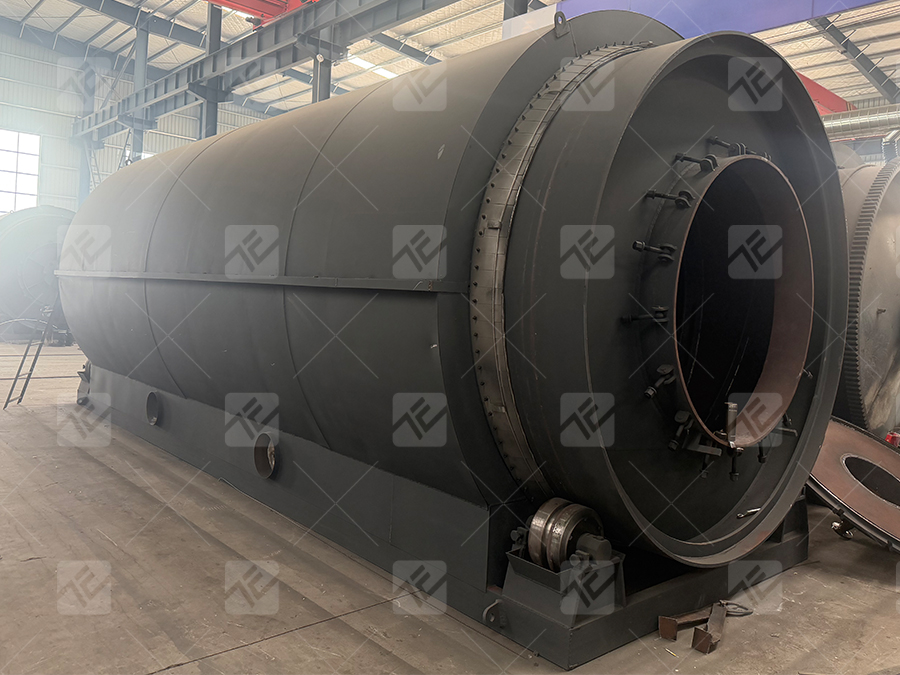
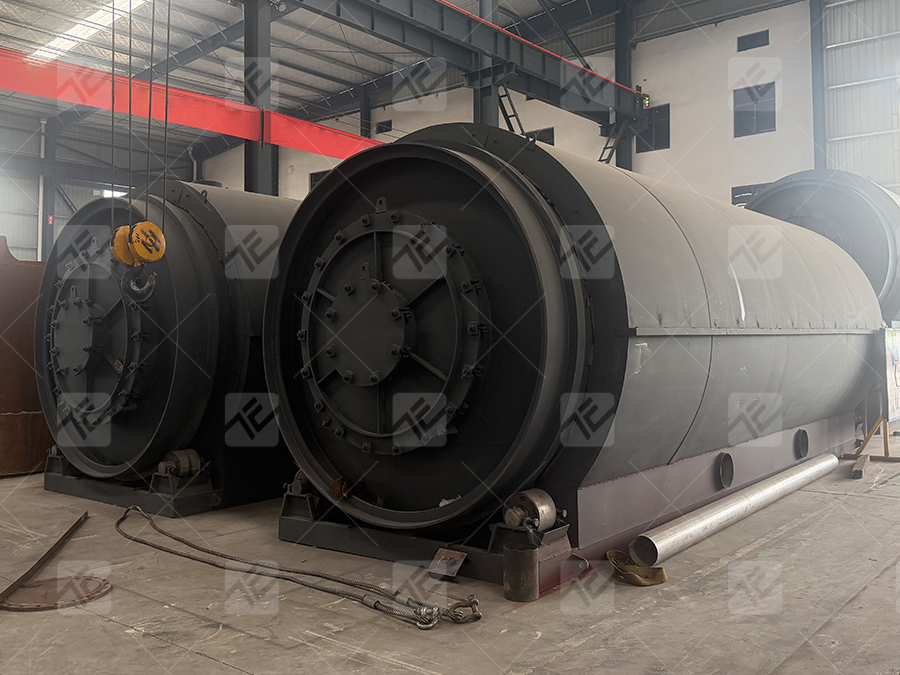
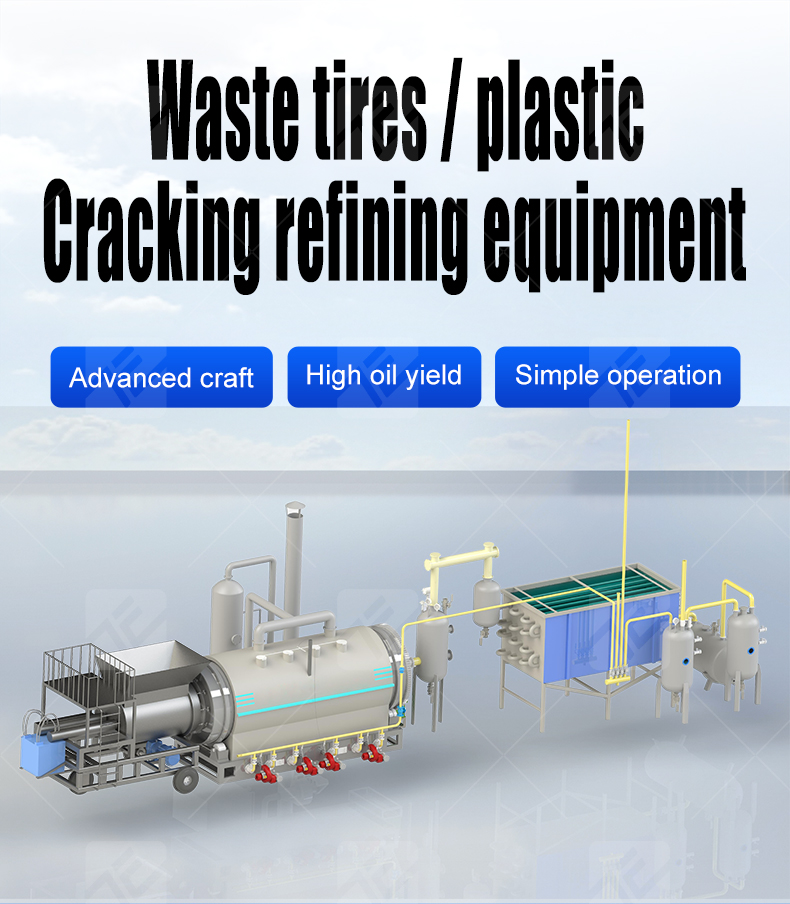
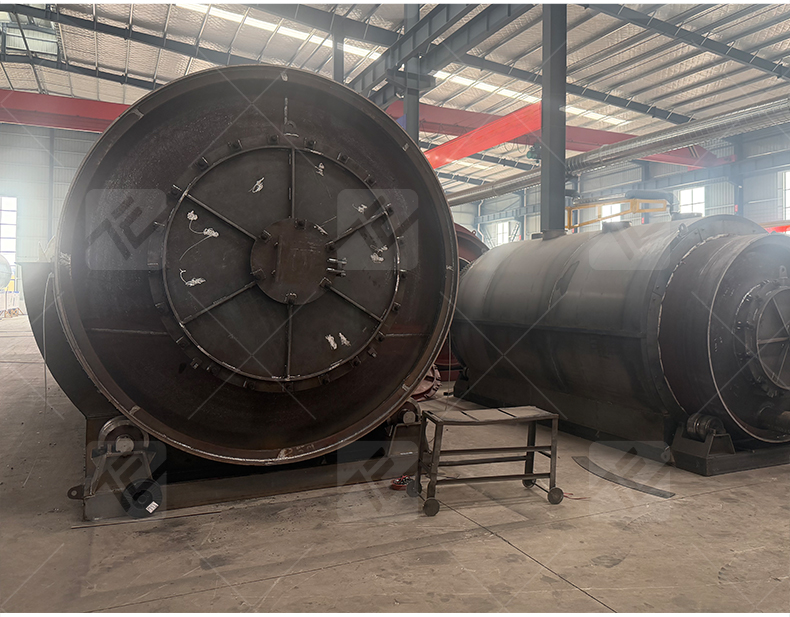
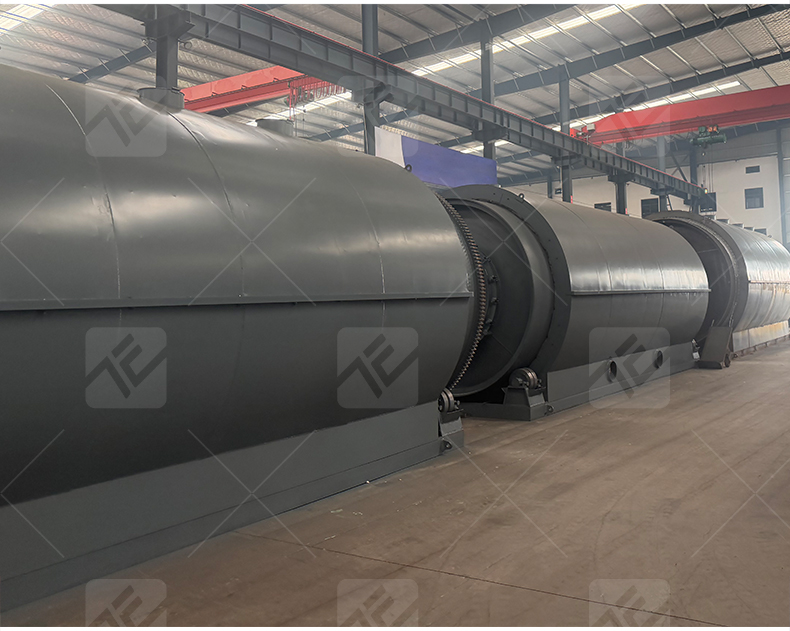
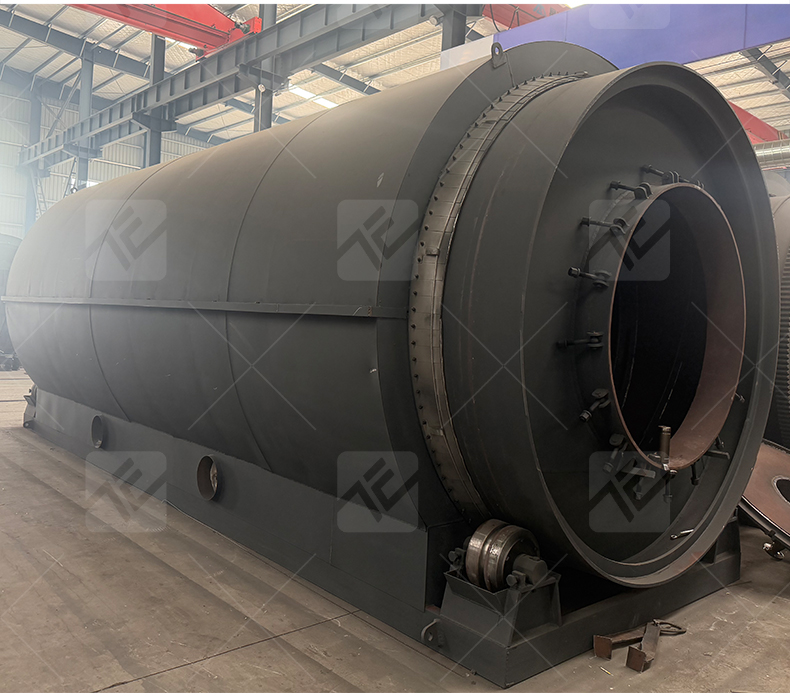
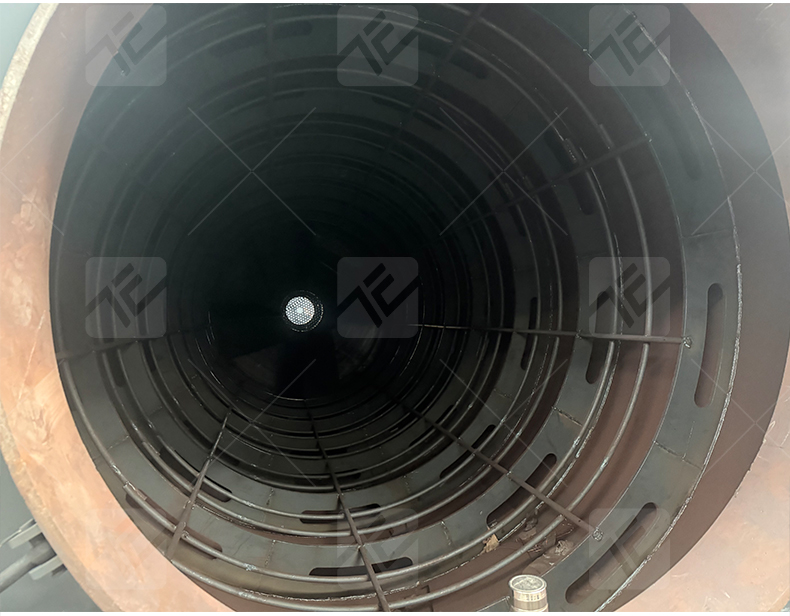
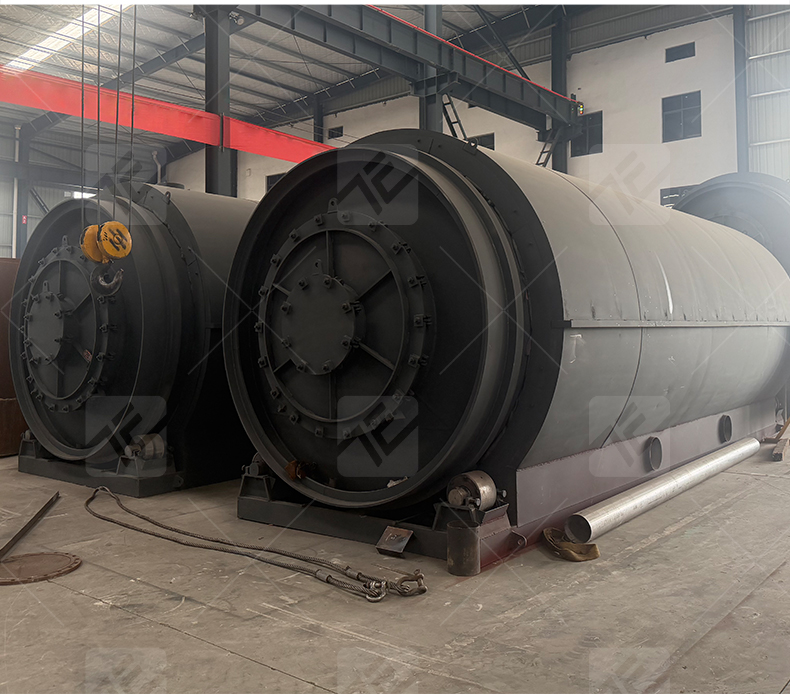
The tire pyrolysis machine operates in a sealed, oxygen-free or slightly negative pressure environment. By heating to 380–450℃, the high-molecular rubber in the tires undergoes
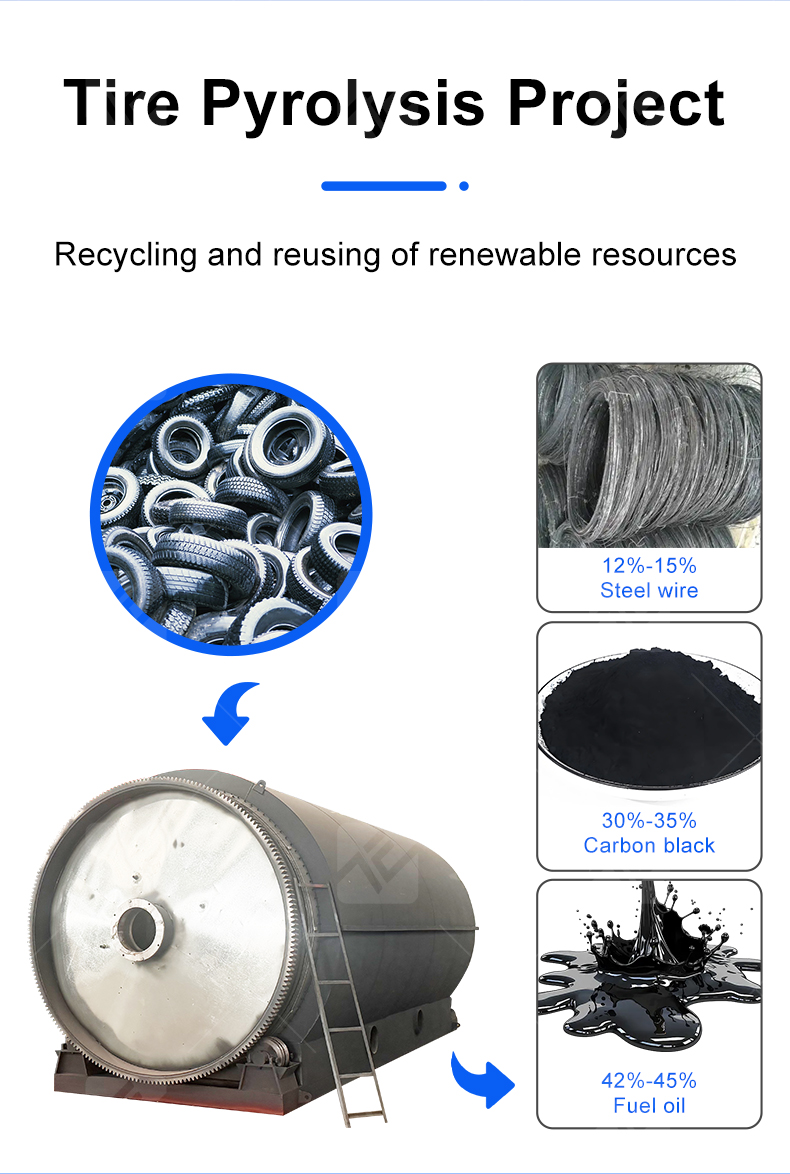
a thermal decomposition reaction, generating products such as oil gas, carbon black, and steel wires. The entire process mainly consists of the following stages:
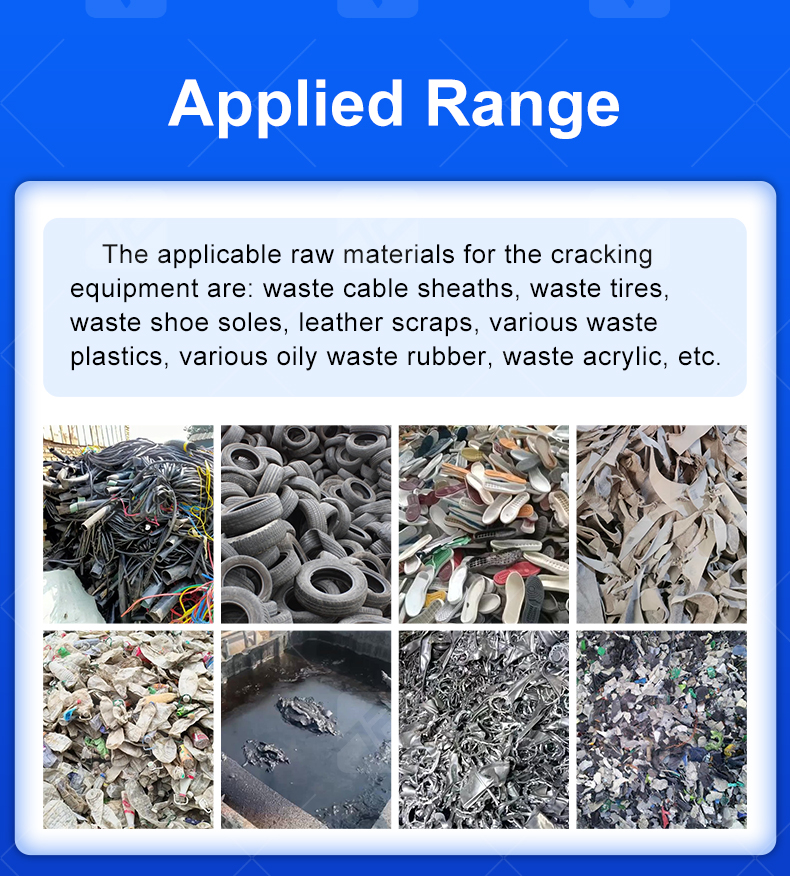
1.Pre-treatment: The used tires need to undergo processes such as cutting, crushing, and magnetic separation first, and then be made into rubber blocks about 30mm in size,
which is convenient for uniform feeding.
2.Pyrolysis: After the gel block is introduced into the reaction vessel, it undergoes continuous pyrolysis within the temperature range of 200–300℃ for 6–12 hours, resulting in the
production of a large amount of gas and oil.
3.Condensation recovery: The oil and gas are cooled by a multi-stage condensation system, and then converted into liquid cracking oil (which can be used as fuel oil or further
refined).
4.Exhaust gas utilization and purification: The non-condensable combustible gas, after desulfurization and odor removal, is recycled for use in the heating system, achieving
self-sufficiency in energy; the flue gas is desulfurized and dust-filtered to meet emission standards before being discharged.
5.Residue treatment: The pyrolyzed carbon black and steel wires are respectively discharged through screw conveyors. After cooling, magnetic separation and packaging, they
can be sold or further processed.
TOECO

Copyright © Henan Toeco Machlnery Co., Ltd. All Rights Reserved